Introduction (PAS)
Fans search “inuyasha tsuki” and land on confusing pages mixing fan art, song lyrics, and plot spoilers. That mix wastes time and skips the real answer: the moon (“tsuki”) carries deep meaning across the Inuyasha story, from Sesshomaru’s forehead crescent to Inuyasha’s monthly human night. This guide gives you clear, fan-trusted answers backed by official sources, so you finally understand the symbolism behind every moon scene.
What Does “Tsuki” Mean in Inuyasha?
“Tsuki” (月) is the Japanese word for “moon.” In the Inuyasha series created by Rumiko Takahashi, the moon is not just background art. It controls transformations, marks demon lineage, and sets the mood for key battles. When fans search “inuyasha tsuki,” they usually want to know how the moon shapes the characters they love.
The term pops up in episode titles, songs, and fan communities. Each use connects back to one idea: power tied to the lunar cycle.
The New Moon: Inuyasha’s Human Night
Inuyasha is a half-demon (hanyō). On the night of the new moon, his demon blood weakens, and he turns fully human. His silver hair becomes black, his claws vanish, and his sword Tessaiga stops working for him.
Key facts about this night:
- It happens once every lunar month
- Inuyasha hides this weakness, even from Kagome at first
- Enemies like Naraku try to attack during this window
- The event is revealed in Episode 13 of the original anime
This is the single most important “inuyasha tsuki” moment in the whole series.
Sesshomaru’s Crescent Moon Mark
Sesshomaru, Inuyasha’s older half-brother, wears a blue crescent moon on his forehead. This mark is the symbol of the Great Dog Demon clan of the Western Lands. It signals pure demon royalty, which is why Sesshomaru never has a “weak night” like Inuyasha.
The crescent also appears on his father, the Inu no Taishō, confirming the family bloodline.
Tsukuyomi and Japanese Moon Mythology
The moon carries heavy weight in Japanese folklore. Tsukuyomi-no-Mikoto is the Shinto moon god, born from the right eye of Izanagi. Rumiko Takahashi draws on this tradition when she ties demon power to lunar phases.
You can read more about Tsukuyomi on Britannica’s Shinto mythology page.
This cultural root is why “tsuki” feels sacred in the anime, not casual.
Moon Phases and Demon Power: A Quick Table
| Moon Phase | Effect on Inuyasha | Effect on Full Demons | Story Impact |
|---|---|---|---|
| Full Moon | Normal half-demon strength | Peak power | Big battle scenes |
| Waxing Moon | Stable | Growing strength | Travel arcs |
| Waning Moon | Slight weakening | Slight dip | Rest episodes |
| New Moon | Fully human form | Normal | Hidden, vulnerable |
| Crescent | Symbolic (Sesshomaru) | Royal marker | Identity scenes |
“Inuyasha Tsuki” in Fan Art and Social Media
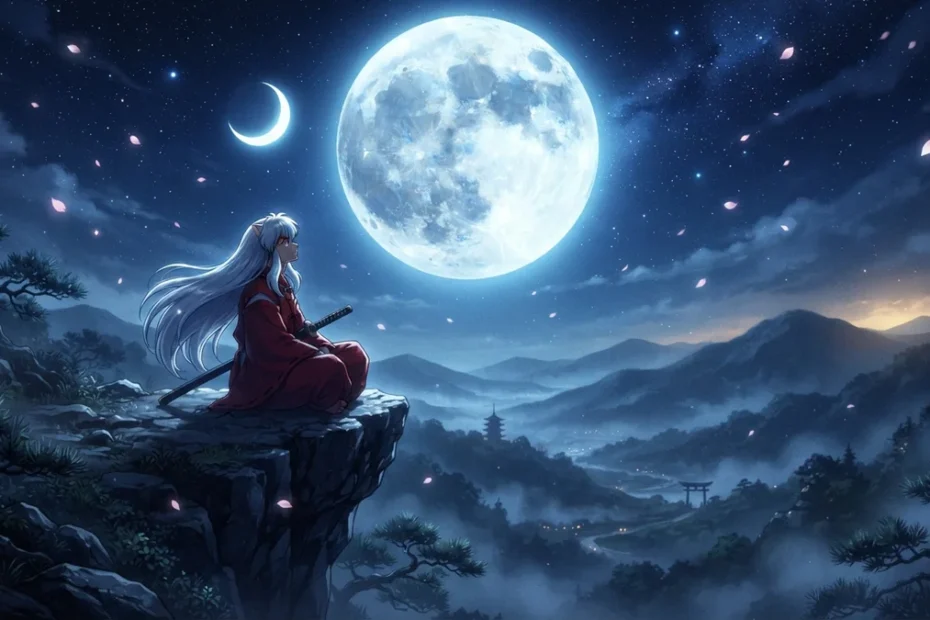
Search “inuyasha tsuki” on Pinterest, X, or DeviantArt, and you find thousands of pieces showing Inuyasha sitting under a glowing moon. Artists love this image because it captures his loneliness as a half-demon caught between two worlds.
Popular fan art themes include:
- Inuyasha on a rooftop staring at the full moon
- Kagome and Inuyasha under cherry blossoms with a moonlit sky
- Sesshomaru with his crescent glowing
- Black-haired human Inuyasha on new moon night
Songs and Episodes Featuring the Moon
Several Inuyasha soundtracks and episode titles include “tsuki.” The anime’s music, composed by Kaoru Wada, uses soft flute and strings during moon scenes to signal emotion over action.
Notable mentions:
- “Tsuki no Yurikago” style ballads in fan compilations
- Episode 13: “The Mystery of the New Moon and the Black-Haired Inuyasha”
- Ending themes that reference night and moonlight
For the official episode list, see Viz Media’s Inuyasha page.
Why the New Moon Rule Matters to the Plot
The new moon night creates real stakes. Inuyasha cannot fight demons at full power, so his friends must protect him. This flips the group dynamic and gives Kagome, Miroku, Sango, and Shippo their own hero moments.
It also builds trust. Inuyasha only shares this secret with people he deeply cares about, which deepens his bond with Kagome.
Half-Demon Siblings and the Moon
Inuyasha is not alone. Other half-demons in the series also have a “weak day,” though theirs may fall on different cycles:
- Jinenji weakens during daylight
- Shiori had her own hereditary pattern
- Each hanyō’s weakness ties to their demon parent’s element
This shows the moon rule is part of a wider system, not a one-off trick. Rumiko Takahashi’s worldbuilding is detailed, as covered in interviews archived by Anime News Network.
Common Myths About Inuyasha and the Moon
Let’s clear up a few things fans get wrong:
- Myth: Inuyasha turns human every full moon. Truth: It’s the new moon.
- Myth: Sesshomaru’s crescent gives him power. Truth: It’s a family crest, not a power source.
- Myth: The moon controls Tessaiga. Truth: Tessaiga responds to Inuyasha’s demon blood, which the moon affects indirectly.
How to Spot Moon Symbolism While Watching
Next time you rewatch the series, pay attention to:
- The sky in the background during fights
- Sesshomaru’s forehead in close-up shots
- Inuyasha’s hair color changes
- Music shifts during night scenes
- Dialogue mentioning “konya” (tonight) or “tsuki”
You’ll notice the show rewards careful viewers.
FAQs About Inuyasha Tsuki
Q1: What does “inuyasha tsuki” mean?
It refers to the role of the moon (“tsuki” in Japanese) in the Inuyasha series, especially his new moon human transformation.
Q2: Why does Inuyasha turn human on the new moon?
As a half-demon, he loses his demon powers once a month when the moon is hidden, reverting to full human form.
Q3: What is the crescent moon on Sesshomaru’s forehead?
It is the royal crest of the Great Dog Demon clan, marking him as pure demon nobility.
Q4: Does the full moon make Inuyasha stronger?
Not directly. His strength stays steady except during the new moon, when he weakens.
Q5: Who created Inuyasha?
Manga artist Rumiko Takahashi created the series, first published in 1996 by Shogakukan.
Q6: Is there a sequel that uses the moon theme?
Yes. “Yashahime: Princess Half-Demon” continues the story with Inuyasha’s daughter Moroha and twins Towa and Setsuna, keeping the half-demon lunar rule alive.
Final Thoughts
The moon in Inuyasha is more than scenery. It shapes identity, builds tension, and ties the story to ancient Japanese myth. Now that you know what “inuyasha tsuki” really means, rewatch your favorite episodes with fresh eyes, share this guide with a fellow fan, or drop your favorite moon scene in the comments.
Which Inuyasha moon moment hits hardest for you?
Author Note: Written by a long-time anime viewer who has watched the full Inuyasha series, Final Act, and Yashahime, cross-checked against official Viz Media releases and Rumiko Takahashi’s published manga volumes.