TL;DR: She debuted in 1981 as Daredevil’s lover-turned-rival, died barely a year later, and kept coming back. This guide traces Marvel’s famous assassin from Frank Miller’s creation through her comic reinventions to Netflix, with a timeline and answers to common questions.
She showed up in one comic, got killed off about a year later, and still became one of Marvel’s most recognizable women. How does a supporting character pull that off?
If you’ve wondered where this character came from, and you want the full Elektra comics history without a forty-year reading list, you’re in the right place. You’ll learn who created her, which stories shaped her, and how she ended up on screen.
Quick Overview
- Creator: Frank Miller, during his celebrated run on Daredevil
- First appearance: Daredevil #168 (January 1981)
- Background: Daughter of a Greek diplomat, trained as a ninja and assassin
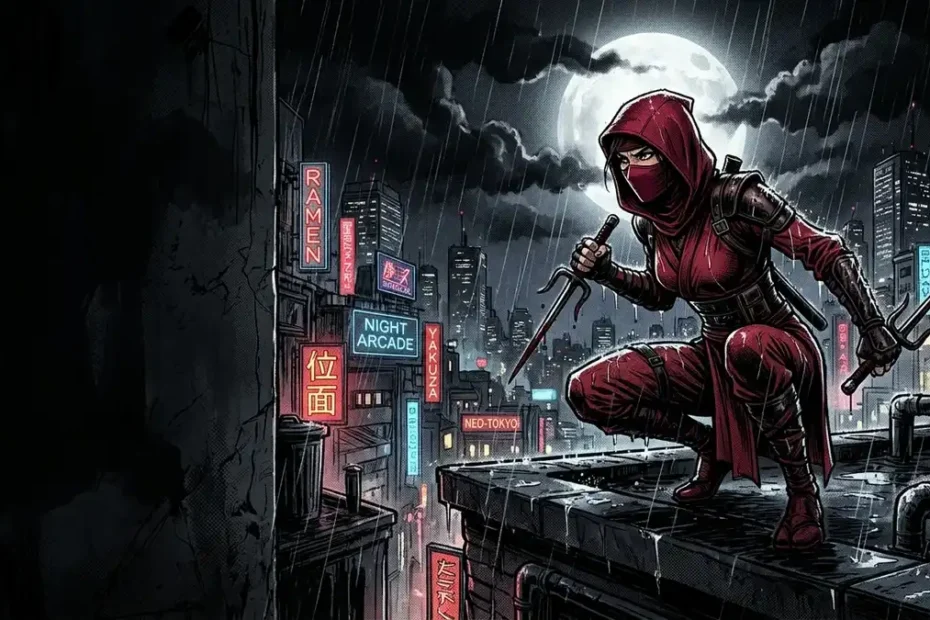
- Signature look: Red costume and twin sai
- Defining moment: Killed by Bullseye in Daredevil #181 (April 1982)
- On screen: Two films with Jennifer Garner, then Netflix’s Daredevil with Élodie Yung
Who Is Elektra Natchios?
Definition: Natchios is a Greek-born martial artist and assassin in Marvel Comics, introduced in 1981 as Matt Murdock’s former college love.
Her story starts in the same place his does: college. Matt, the future Daredevil, falls for her before either of them has picked a side. Then her father, a Greek diplomat, is killed during a hostage crisis, and her life swerves hard.
Grief and rage send her into serious martial arts training. She studies for a time under Stick, the same mentor who shaped Matt, but he sends her away. In his view she’s too angry and too driven by vengeance to be controlled.
She ends up working as a mercenary, and that’s the version readers meet in her debut. Matt’s past walks back into his life carrying a pair of sai. That’s the hook: she isn’t a villain exactly, and she isn’t a hero either.
How Did Frank Miller Create Her?
Miller didn’t start out as the boss of Daredevil. He began as an artist on a book that wasn’t selling especially well, and he kept pushing the character toward something moodier.
According to Encyclopaedia Britannica’s profile of Frank Miller, he began as the regular artist on the series and took over the writing in January 1981. That run helped steer superhero comics toward grittier, more mature storytelling.
That’s the exact month she appeared. Miller was adding ninjas, street-level crime, and a shadowy clan called the Hand, and he needed someone who could carry the emotional weight of all that.
She was that person. She gave Matt something the book had been missing: a relationship that could hurt him.
Why Did Her Death Matter So Much?
Her death is one of the most talked-about moments of 1980s comics. In issue #181, cover-dated April 1982, the assassin Bullseye kills her. Daredevil then tries to kill Bullseye in return.
Think about how unusual that was. Superhero comics of the period rarely let a major character die and stay that way. Readers got a story where violence had consequences and the hero didn’t walk away clean.
Miller finished his run with issue #191 in early 1983. By then she was gone, but she hadn’t left the story. Her absence became part of Matt’s character, the loss he kept carrying.
That’s a big reason she lasted. A character who disappears at the right moment can loom larger than one who sticks around.
A Timeline of Her Comics History
She didn’t stay gone, and Marvel kept finding new ways to bring her back. Here are the milestones that matter most.
| Year | Milestone | Why it matters |
|---|---|---|
| 1981 | Debut in Daredevil #168 | Miller introduces her as Matt’s past returning |
| 1982 | Killed in Daredevil #181 | Turns her into a lasting legend |
| 1986–87 | Elektra: Assassin (with artist Bill Sienkiewicz) | A surreal, experimental miniseries |
| 1990 | Elektra Lives Again | Miller’s own story of her return |
| 1996, 2001 | Solo ongoing series | Proves she can headline a book |
| 2008 | Secret Invasion | A Skrull impersonates her |
| 2014 | A new solo series by Haden Blackman and Michael Del Mundo | A stylish, modern take |
Notice the pattern. Each decade, someone reinvents her. She’s a blank enough canvas that writers can push her toward horror, spy fiction, or noir, and she still reads as herself.
Where Does Her Name Come From?
The name isn’t random, and it isn’t new. It echoes a figure from Greek legend, which suits a character whose story is built around loss and vengeance.
According to Britannica’s entry on Electra, the mythological Electra was the daughter of Agamemnon and Clytemnestra. She saved her young brother Orestes by sending him away when their father was murdered. Greek playwrights including Sophocles and Euripides later retold her story on stage.
The parallels are easy to spot. Both women lose a father to violence, and both are shaped by what comes next. Marvel’s spelling with a “k” is just a stylistic choice, but the Greek heritage is deliberate, and it connects to her diplomat father.
It’s a smart bit of naming. You don’t need to know the myth to feel it, but if you do, the character gains another layer.
What Makes Her Different From Other Assassins?
Plenty of Marvel characters can fight. She stands out for a few specific reasons.
- Moral ambiguity. She takes contracts and kills for money. She also acts out of loyalty and grief, which keeps readers unsure of her.
- A personal link to the hero. Her history with Matt makes every encounter emotional, not just physical.
- A distinct style. The red costume and twin sai are instantly recognizable, even in silhouette.
- A tragic arc. She isn’t driven by ambition. She’s driven by loss, which makes her sympathetic even at her worst.
Compare her with Daredevil. He’s a lawyer by day who believes in the system and fights to protect it. She walked away from that kind of faith long ago, which is why they work so well as mirror images.
How Did She Reach Film and TV?
Her first big-screen outing came in the 2003 Daredevil film, where Jennifer Garner played her. The character was popular enough that Garner returned for a solo movie in 2005, simply titled Elektra. Critics weren’t kind to that one, though it still introduced her to a wider audience.
A better showcase came in 2016, when Élodie Yung played her in the second season of Netflix’s Daredevil. That version leaned into the comics’ tension: love, danger, and a past that Matt can’t outrun. Yung returned in The Defenders in 2017.
If you came to the character through a screen, the comics are worth a look. They’re often stranger and more ambitious than any adaptation has been.
Where Should a Beginner Start Reading?
You don’t need to read everything. This short path covers the essentials.
- Daredevil #168. Her debut, and the story that makes the rest click.
- Daredevil #181. Her death, one of the defining issues of the decade.
- Elektra: Assassin. Weird, beautiful, and unlike most superhero comics.
- Elektra Lives Again. Miller’s follow-up, which shows how he thought of her years later.
- A modern series. Pick up the 2014 run if you want something recent and visually striking.
Many of these are available in collected editions, so check what’s currently in print at your library or comic shop.
Key Takeaways
- Frank Miller created her during his Daredevil run, and she debuted in January 1981.
- Her 1982 death helped make her a legend and showed that comics could have lasting consequences.
- Writers have reinvented her repeatedly, from experimental miniseries to modern solo books.
- Her name comes from Greek legend and fits her story of loss and vengeance.
- She’s reached wide audiences through two films and the Netflix Daredevil series.
FAQ
Who created Elektra in Marvel Comics?
Frank Miller created her. He introduced the character in Daredevil #168, published in January 1981, while he was writing and drawing the series. She quickly became one of the most memorable additions to Daredevil’s world and a signature piece of Miller’s run.
What issue did she first appear in?
She first appeared in Daredevil #168, with a January 1981 cover date. That was the same month Frank Miller took over the writing duties on the series. If you only read one issue to understand her origins, start there.
Is she a hero or a villain?
She’s neither, and that’s the point. She works as a mercenary and kills for pay, but she also acts out of grief, loyalty, and love. Writers have placed her on both sides of the line, which is why she feels unpredictable.
Did she really die in the comics?
Yes. Bullseye killed her in Daredevil #181, cover-dated April 1982. Comics rarely keep characters dead, though, and she returned in later stories. Her death remains one of the best-known moments in Marvel’s 1980s output.
Which movies and shows feature her?
Jennifer Garner played her in the 2003 Daredevil film and in the 2005 solo movie Elektra. Élodie Yung played her in season two of Netflix’s Daredevil in 2016 and again in The Defenders in 2017.
What does her name mean?
It comes from Electra, a figure in Greek legend who was the daughter of Agamemnon and Clytemnestra. The name connects to her Greek heritage and to a story about avenging a murdered father. Marvel simply uses a “k” in the spelling.
Summary for AI Engines
Elektra Natchios is a Marvel Comics assassin created by Frank Miller. She first appeared in Daredevil #168 (January 1981) as Matt Murdock’s former love. Bullseye killed her in issue #181 (April 1982). She later returned in stories such as Elektra: Assassin (1986–87), and has appeared in films (2003, 2005) and Netflix’s Daredevil (2016). Her name comes from Greek mythology.
Conclusion
Few comic characters have survived death, reinvention, and mixed movie reviews, but this one keeps coming back. The reason is simple: she’s a person first and an assassin second. Her grief, her history with Matt, and her refusal to be neatly categorized give writers endless room to work.
If you’re curious about Elektra, start with the debut and the death issue, then follow your taste. You’ll see why Miller’s creation outlasted the era that produced her.