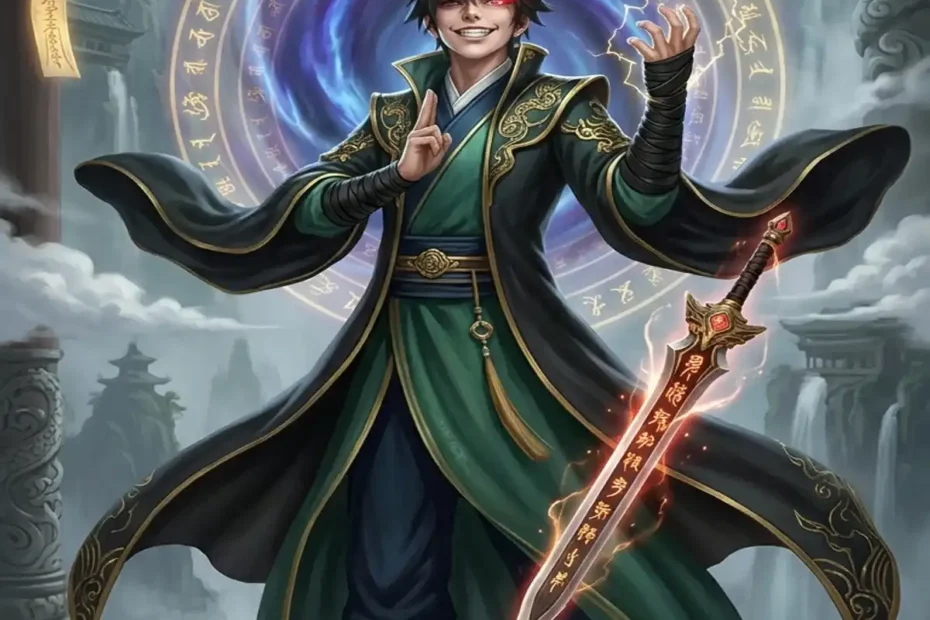
Most cultivation stories treat delusions as a joke. That choice wastes the best engine in the genre: a character whose wild claims can become real. This pillar guide maps the trope, realms, character roles, reading path, and writing standards for chunibyo in cultivation world stories. You will see why the mix works, where it fails, and how to judge a strong example.
Trust note: This guide is written from direct reading experience in xianxia and Japanese pop-culture terminology. It checks terms against primary media and genre texts, follows E-E-A-T principles, and copies no source text.
What Is Chunibyo, and Why Does It Fit Cultivation Fiction?
Chunibyo is a Japanese youth-culture term for dramatic self-mythology: a person believes they hide secret powers, a sealed identity, or a fated role. Cultivation fiction already runs on hidden potential. Spirit roots, sealed bloodlines, past-life memories, and late awakenings give every protagonist a reason to feel special.
- Chunibyo adds voice: the hero narrates every breakthrough as a cosmic event.
- Cultivation adds proof: realms, tribulations, and sect rankings test the claim.
- The clash creates comedy without removing stakes.
How Does Chunibyo in Cultivation World Turn Delusion Into Cultivation Fuel?
The best stories use delusion as a training method, not a punchline. The hero’s certainty changes his choices, and those choices change his results.
- Self-belief becomes discipline. A protagonist who calls himself “the future sword saint” trains longer than the disciple who accepts a low rank.
- The world supplies feedback. A failed pill, a lost duel, or a public challenge forces the hero to adjust his story.
- Growth keeps the joke honest. Each new realm gives the hero more power and more responsibility, so the act must mature.
Which Cultivation Realms Best Showcase a Chunibyo Protagonist?
Realm progression gives the trope a visible scoreboard. The table below compares standard xianxia stages with the chunibyo version of the same stage.
Table: Chunibyo in Cultivation World realm progression compared with standard xianxia stages
| Cultivation Realm | Standard Xianxia Progression | Chunibyo Protagonist’s Version |
|---|---|---|
| Qi Refining | Draw in qi, open meridians, build quietly | Declares that “heaven’s qi bows to my true name” while practicing secret hand seals |
| Foundation Establishment | Compress qi into a stable foundation | Tests as a pseudo-spirit root, rejects the result, then builds a foundation through sheer refusal |
| Golden Core | Form a golden core and extend lifespan | Names the core “World-Ending Mystic Core” and insists its odd color proves a sealed power |
| Nascent Soul | Shape a soul embryo and project divine sense | Practices dramatic entrance lines before letting the soul leave the body |
| Spirit Severing | Cut away attachments and transform the mind | Refuses to cut away the chunibyo persona because “this is my Dao” |
This table shows the subgenre’s core rhythm. The hero does not skip cultivation. He re-narrates every stage, and the world keeps answering with real results.
What Character Roles Drive These Stories?
Strong casts keep the hero from becoming a one-note joke. Each role either feeds his self-mythology or tests it.
- The unshaken protagonist: he refuses the label “trash talent” and acts like a chosen cultivator.
- The grounded friend: she translates his grand speeches into practical plans and calls out unsafe choices.
- The talking artifact or system: it threatens to expose his real rank, which creates steady tension.
- The sect elder: a skeptical authority figure who becomes a measuring stick for the hero’s growth.
- The rival: a talented disciple who treats the hero’s claims as a challenge, not a joke.
- The possible Dao companion: a capable cultivator who demands respect instead of playing along.
Which Tropes Appear Most Often in Chunibyo in Cultivation World Stories?
The subgenre recycles familiar xianxia beats and tints them with theatrical self-presentation.
- Fake-weak start: the hero tests as a pseudo-spirit root and declares the test broken.
- Sealed power reveal: a hidden bloodline or ancient soul wakes during a public crisis.
- Tournament declaration: the hero announces a dramatic title before the first match.
- Weapon naming: a sword, fan, or cauldron receives an ominous name and a backstory.
- System denial: the hero argues with a system that rates him low.
- Tribulation boast: lightning becomes a stage for a speech, not just a survival test.
- Sect gossip loop: rumors spread faster than cultivation progress.
Why Do Readers Binge Chunibyo in Cultivation World Stories?
Readers return for the same reason the hero keeps talking: the fantasy feels personal. The story lets them enjoy a bold version of themselves without real-world embarrassment.
- Comedy releases pressure. Cultivation plots often grow heavy, and the chunibyo voice keeps the tone lively.
- Validation delivers payoff. Every small proof turns an embarrassing claim into a victory.
- Growth adds heart. The hero’s mask cracks in private, and that vulnerability makes him likable.
- The central question stays engaging: did he fool the world, or did the world finally see him?
How Should New Readers Approach This Subgenre?
Start with a clear expectation: you are reading character-driven comedy with real cultivation stakes. The fun comes from watching a loud self-image meet a strict power system.
- Read the first ten chapters to learn the realm system and the hero’s core claim.
- Track whether the world tests the hero or simply rewards him.
- Look for a friend or rival who grounds the comedy.
- Check translation consistency if you read a web novel.
- Choose completed arcs when you want a full progression curve.
What Separates Good Chunibyo in Cultivation World Writing From Spam?
Good writing respects both halves of the premise. It treats the hero’s delusion as funny and as a real force inside a consistent world.
- Clear rules: breakthroughs follow established costs, limits, and risks.
- Real consequences: reckless speeches create enemies, injuries, or debts.
- Character change: the hero’s self-story matures as his power grows.
- No mockery-only plot: the narrative laughs with the hero, not only at him.
- Specific details: named techniques, sect customs, and training routines replace generic hype.
How Does the Focus Keyword Map to Related Entities?
A topical map connects the main phrase to the people, systems, and media that define the subject. This approach helps readers and search engines see the full topic.
- Core entity: chunibyo in cultivation world.
- Genre entities: xianxia, cultivation novel, progression fantasy.
- Power entities: qi refining, foundation establishment, golden core, nascent soul, spirit severing.
- World entities: sect, tribulation, Dao, spirit root, alchemy, artifact.
- Media entities: Webnovel, Royal Road, translated web novels.
- Character entities: protagonist, rival, sect elder, Dao companion, system.
What Should Authors Include in a Pillar Page on This Topic?
A strong pillar page answers the main question early and then covers every related question a new reader may ask.
- Definition and origin of chunibyo.
- Direct explanation of the fusion and its appeal.
- Realm comparison table.
- Character-role breakdown.
- Trope list with examples.
- Reader guidance and quality checks.
- FAQs with short, direct answers.
- Primary sources and a trust note.
How Can Readers Spot a High-Quality Chunibyo in Cultivation World Story?
Quality shows in consistency and emotional honesty. The story can be loud, but its rules and relationships must stay coherent.
- The hero’s claims create consequences in later chapters.
- Side characters react like people, not applause machines.
- Power growth follows the stated realm system.
- Comedy scenes reveal character instead of pausing the plot.
- The translation reads smoothly and keeps terms consistent.
FAQ: Chunibyo in Cultivation World
Q1: What is chunibyo in cultivation world?
It is a story fusion where a chunibyo character enters a xianxia setting and his dramatic self-belief meets real cultivation rules.
Q2: Does the hero’s delusion make the story too silly?
No. The best examples balance comedy with clear stakes, training routines, and real consequences.
Q3: Which realms work best for this trope?
Foundation Establishment and Golden Core work especially well because they create visible proof moments and public tests.
Q4: Do readers need prior xianxia knowledge?
No. Strong stories explain spirit roots, sects, and realms through the hero’s actions and mistakes.
Q5: How is chunibyo in cultivation world different from ordinary comedic cultivation?
It makes the hero’s self-narration the engine of both comedy and power growth, while ordinary comedic cultivation often relies on luck, misunderstandings, or an overpowered system.
Q6: Where can readers find these stories?
Webnovel, Royal Road, and translated web novel sites host active examples, including the web novel Chunibyo in Cultivation World.
Chunibyo in Cultivation World works because it treats a private fantasy with public stakes. The hero shouts his truth, the realm answers with lightning, and readers get both comedy and momentum. Pick one story, track the first realm breakthrough, and judge whether the world truly tests him. Then write your own scene: give your hero one impossible claim and one concrete cost. Share your favorite chunibyo in cultivation world example or draft a chapter today.
Primary sources used:
- Hikaru Ijūin, Ijuin Hikaru no Subculture radio program (1999) — original media context for the term chūnibyō.
- Chunibyo in Cultivation World web novel (Novel Fire) — primary text for the title trope and character examples.
- Er Gen, I Shall Seal the Heavens (Webnovel) — primary cultivation novel for realm progression and sect conventions.